Never Logged Off · a fictional 1998 internet you can explore
Ask someone who was there what they miss about the old web and they rarely mention a website. They mention a texture: pages that loaded one strip at a time over a singing modem, backgrounds tiled with stars, a MIDI file starting without asking, text in three fonts because the page’s author had just learned three fonts existed. The 90s internet was not designed. It was decorated — by millions of people, in public, with enormous sincerity. That is the thing nostalgia is actually for.
Every homepage had a guestbook, and the etiquette was understood by all: if you visited, you signed. Entries were short, warm and gloriously unmoderated — “cool page, sign mine back!” was the era’s social contract, half courtesy, half link exchange. Guestbooks were how strangers became regulars. Reading one now, with its little dated rows of names and hometowns, feels like reading the flyleaf of a library book that a whole town passed around.
Before algorithms decided what you saw next, webrings did: circles of sites on a theme — Ontario cottages, UFO sightings, somebody’s cats — linked by a small footer on every page: Previous, Random, Next. You fell into a ring and surfaced forty minutes later somewhere you would never have searched for. It was browsing in the literal sense, and the randomness was the reward. Search engines indexed the old web; webrings wandered it.
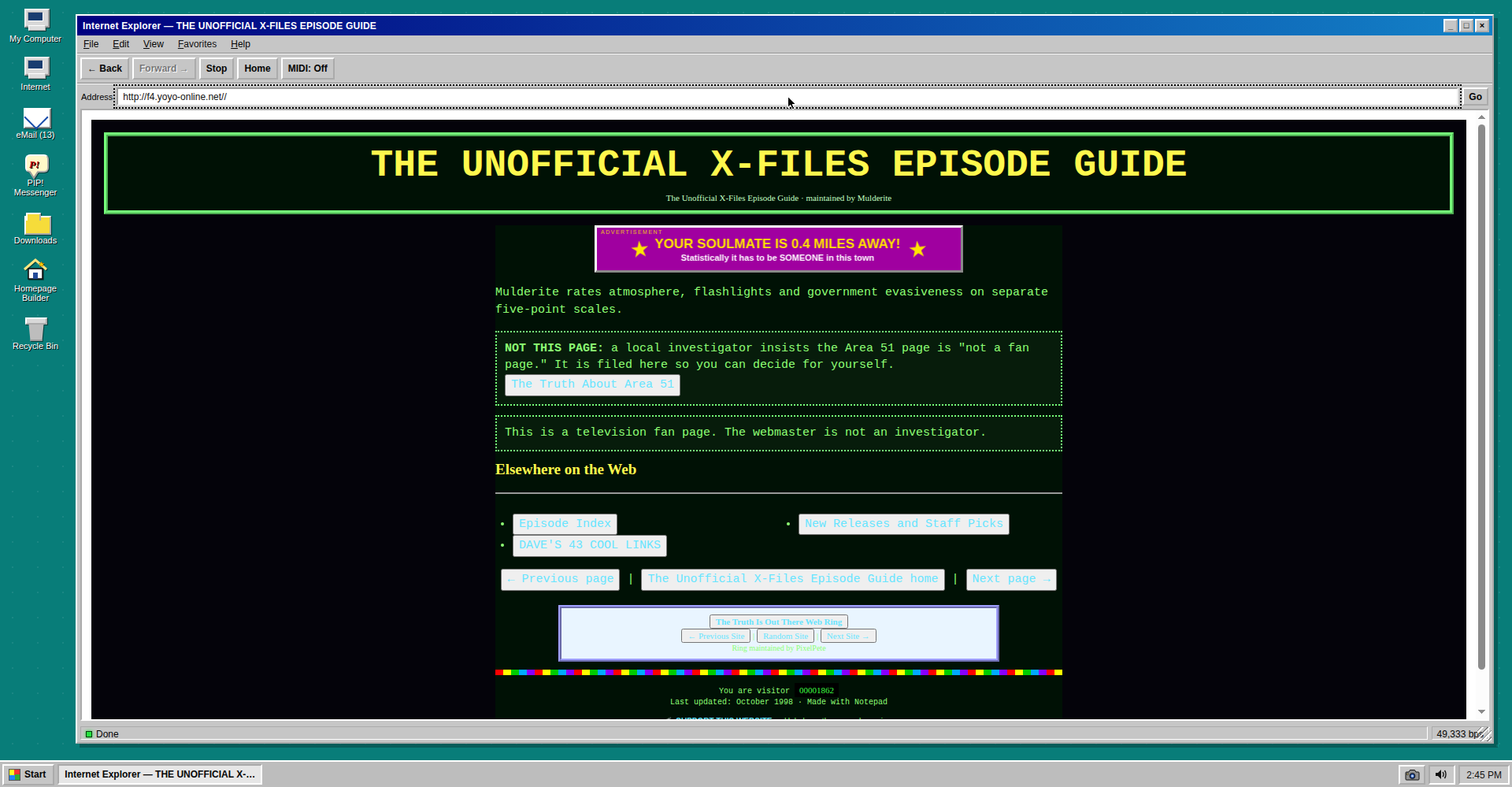
A hit counter told the world — and, more importantly, the author — that somebody had been there. Badges boasted “Best viewed at 800×600” or membership in some unofficial hall of fame. Animated dividers, blinking “NEW!!!” signs, Under Construction GIFs with their little digging man: all of it was a teenager’s bedroom wall, except the bedroom was the size of the planet. Modern eyes call it clutter. At the time it was proof of life — each page unmistakably made by a specific person, on a specific evening, for no commercial reason at all.
The old web ran at the speed of a shared phone line. You loaded a page and waited; you downloaded one song and made tea. Somebody picking up the telephone killed your connection, and the whole household knew the rules. That friction paced everything — nobody refreshed anything, because refreshing cost minutes. What replaced it is faster in every measurable way, and quieter in one important one: the web of feeds is read-only for most people, while the old web expected you to build a page of your own and sign the guestbook on your way out.
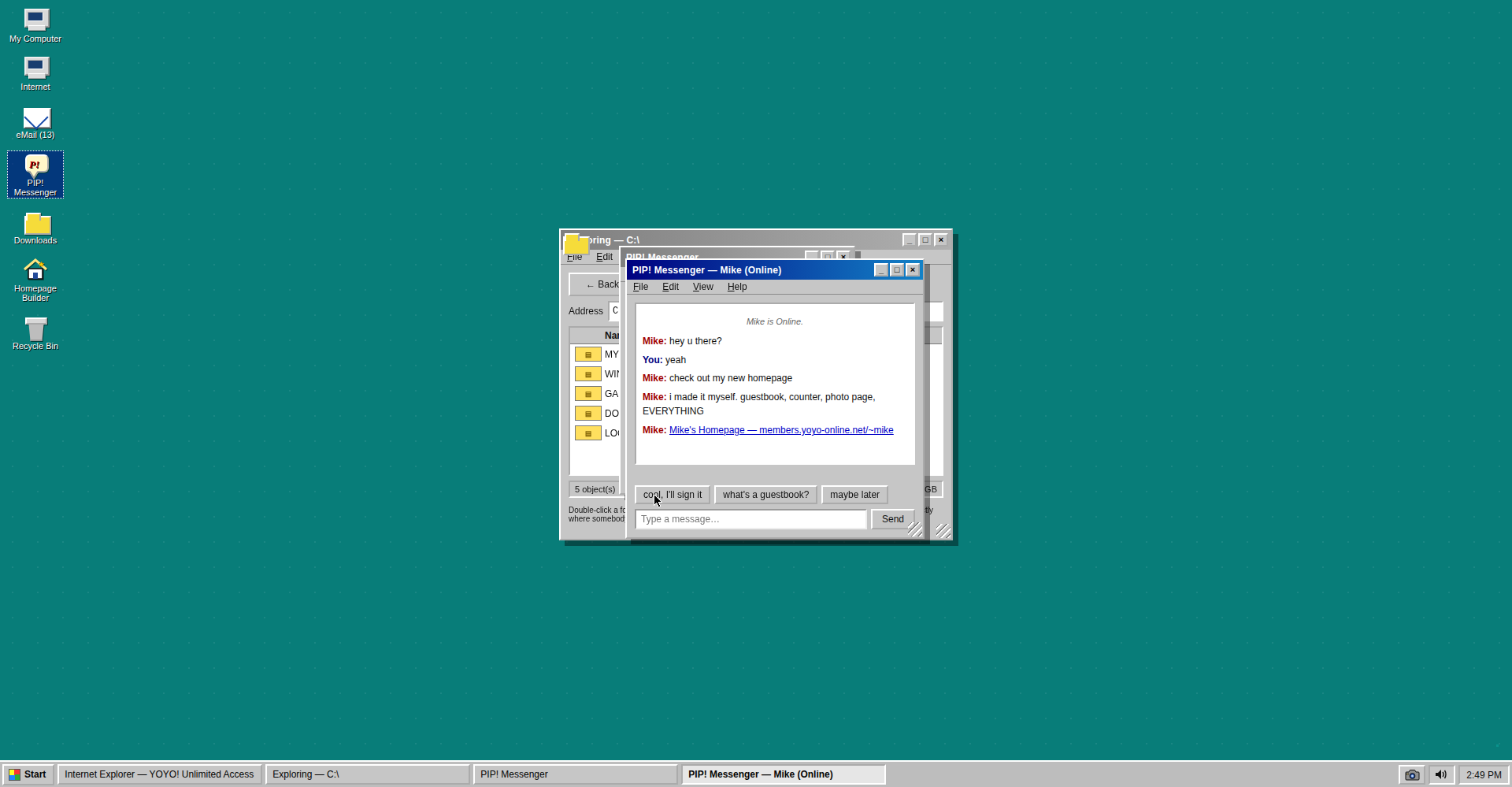
Pieces of the old web live on in archives and in small communities that still build personal pages by hand. And it survives here, as a working fiction: Never Logged Off is a small, explorable 1998 internet — portal, guestbooks you can sign, webrings that close their loops, chat, mail, and pages that were “last updated” a quarter-century ago. Come in, wander, and mind the etiquette: sign the guestbook before you leave.