Never Logged Off · a fictional 1998 internet you can explore
In 1998 the internet stopped being a curiosity and became a household utility — but it was still a place you visited, deliberately, the way you would visit a friend. Fewer than 200 million people in the whole world were online. If you were one of them, this is what your evenings looked like.
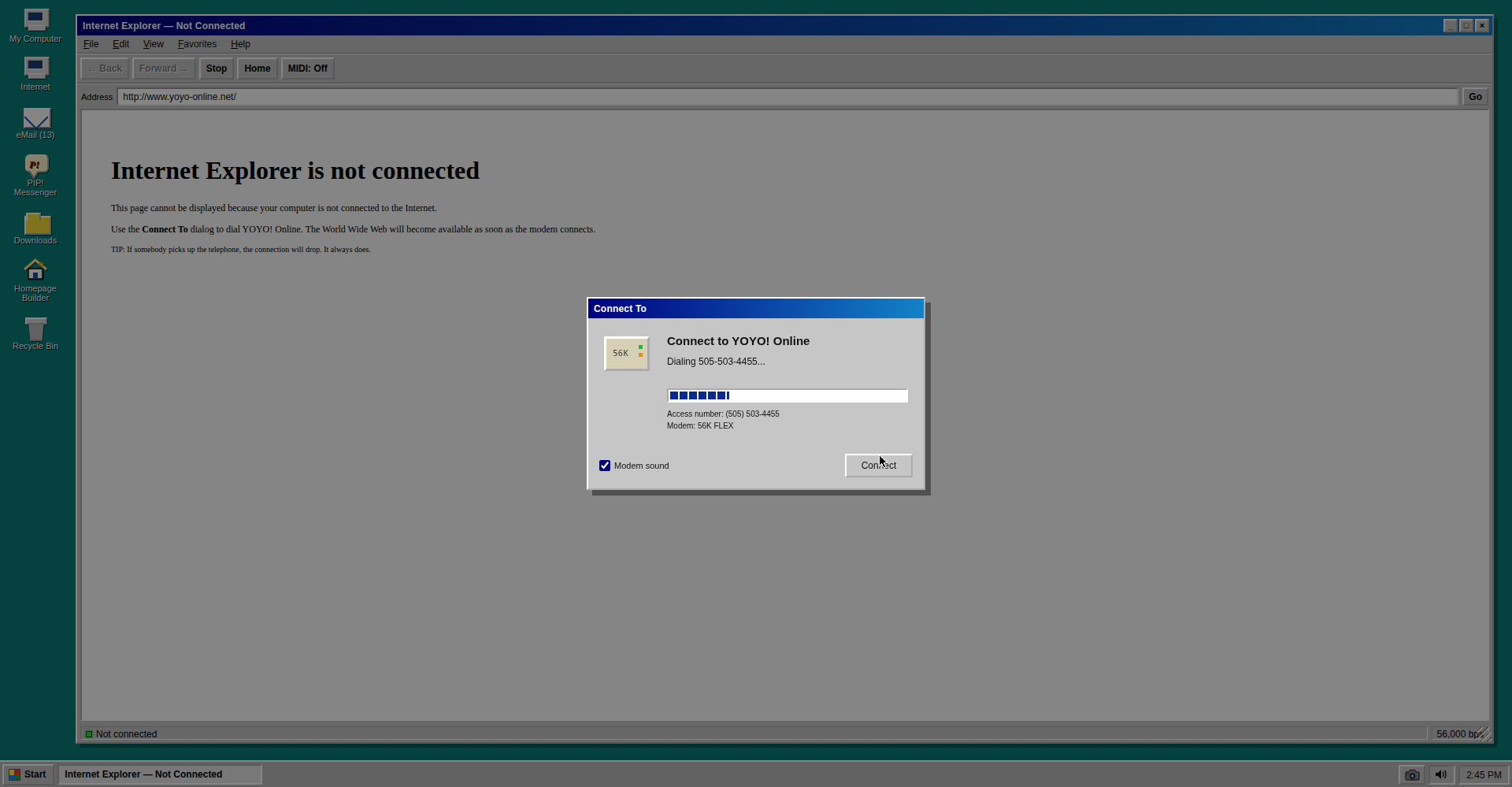
Nobody was “always online.” You sat down at the family computer, double-clicked a dial-up icon, and listened to the modem negotiate — dial tone, beeping numbers, a burst of static like a fax machine clearing its throat — before a small window announced you were connected at 33,600 or, if the line was good and the modem new, 56,000 bits per second. The connection used the household’s one phone line, which meant the whole family lived under a treaty: if someone picked up the phone in the kitchen, your download died. Free-trial discs from AOL and its rivals arrived in the mail by the millions, promising 50, then 100, then 500 free hours.
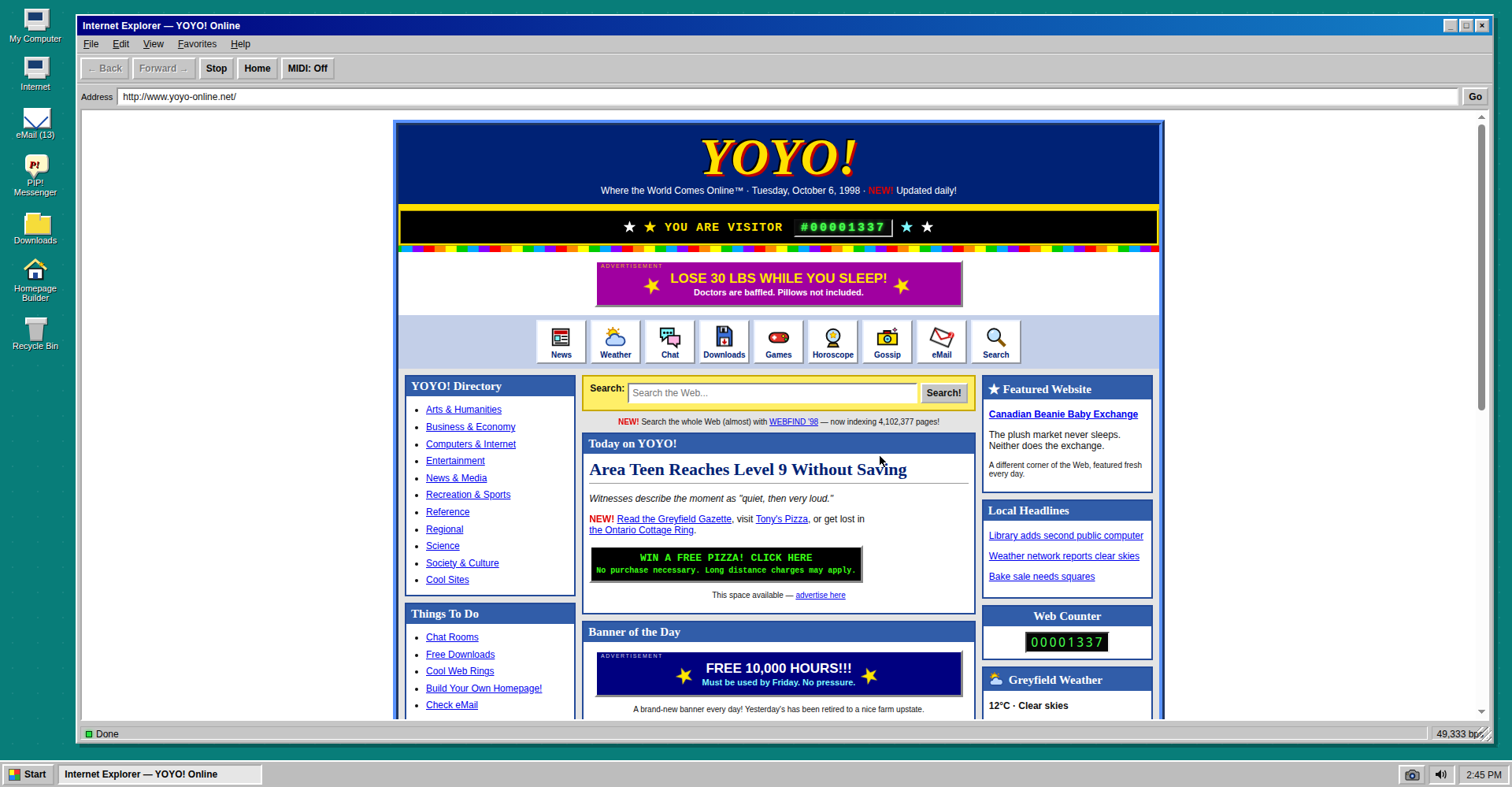
Search existed, but it was not yet a single front door. Yahoo! was a hand-built directory, browsed category by category like a library. AltaVista, Lycos, Excite and WebCrawler competed on raw coverage, and results were famously hit-or-miss. Ask Jeeves let you type a full question, as if asking a butler. And in September 1998, two Stanford students incorporated a company called Google — a footnote that year, not yet a verb. Much of the real discovery happened sideways: through links pages, “cool site of the day” awards, and webrings that ferried you from one hobbyist page to the next.
The typical website of 1998 was not a company’s. It was a person’s: a homepage on GeoCities — filed under a themed “neighbourhood,” Athens for philosophy, SunsetStrip for music — or Angelfire, Tripod, or a page bundled with your ISP account. It had a tiled background, a visitor counter, a guestbook you were politely expected to sign, an “Under Construction” sign that might stay up for years, and strong opinions about a band, a show, or a sports team. Pages announced they were “best viewed at 800×600 in Netscape Navigator.” Making one was a rite of passage; HTML was learned by viewing source on other people’s pages and stealing their tricks.
Email came from Hotmail or your ISP, checked a few times a day, not carried in a pocket. ICQ — “I seek you” — gave everyone a number and a flower icon that bloomed when a friend came online; AIM buddies lists and IRC channels ran the social life of teenagers, and chat rooms were the public square: moderated just enough, strange in the way only anonymous rooms full of strangers typing in real time can be. Files moved at a patience-testing crawl, a single song taking most of an hour over a modem — Napster was still a year away.
Underneath the novelty ran a low hum of dread. The millennium bug — computers reading “00” as 1900 — filled magazines and sold survival guides, and 1998 was the year ordinary people started hearing about it. The web of 1998 is cheerful on the surface and quietly anxious underneath, which is part of its flavour.
Never Logged Off rebuilds that year as a place you can still walk around: a fictional 1998 internet of more than 130 hand-made pages, with the modem, the portal, the guestbooks and the anxiety all included. Free to explore — the old internet kept its door open.